
Is rest, ice, compression and elevation still advised for sprains?
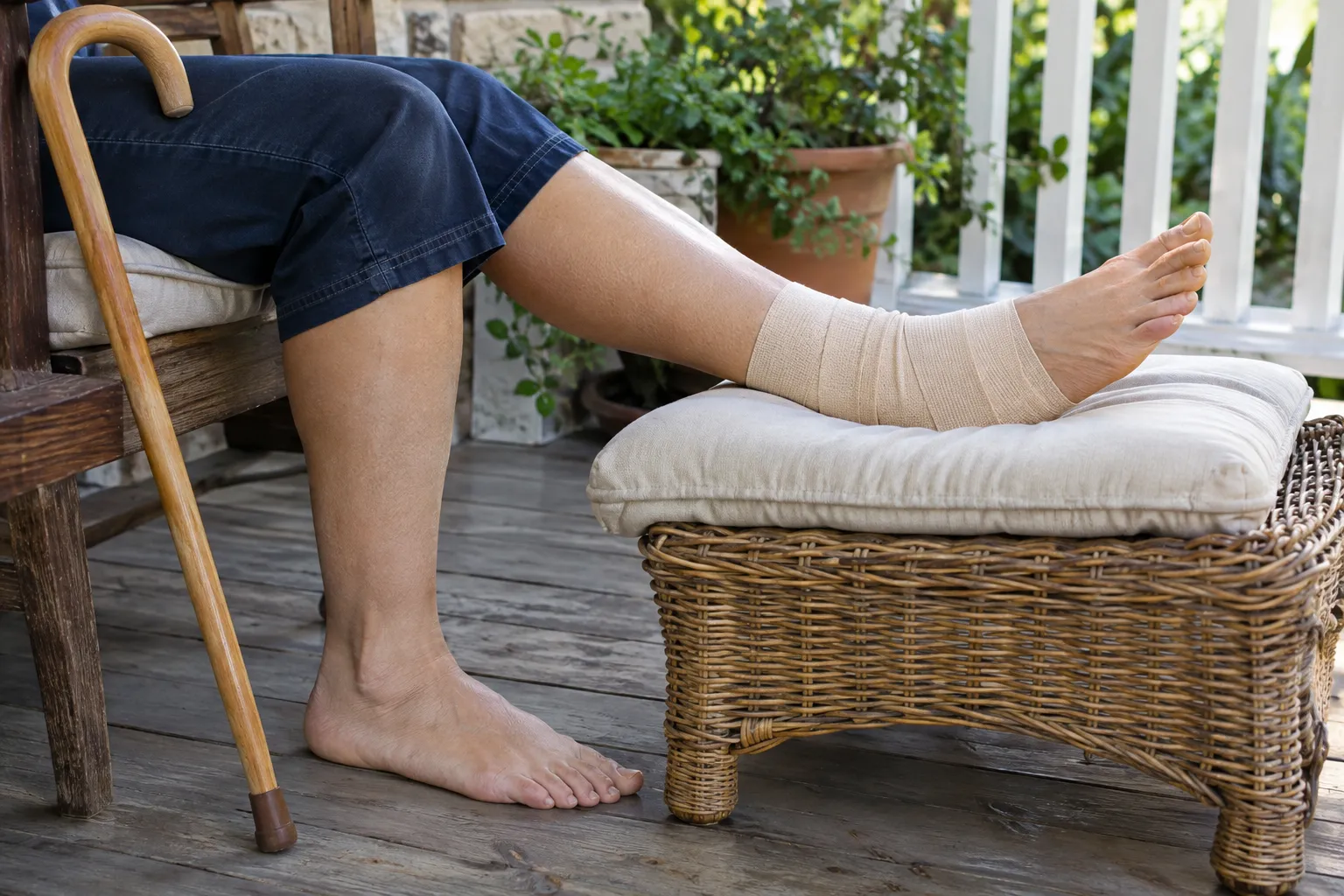
An acronym that gets repeated for years can outlive the evidence behind it, so the question is a fair one. The answer depends on which published page you ask.
What AAOS OrthoInfo lists
AAOS OrthoInfo's sprained ankle guide names "The rest, ice, compression, elevation, or RICE, protocol." The same page adds: "Most sprains heal with conservative treatments like ice, elevation, over-the-counter medications, and simple rehabilitation exercises."
What separates the acronym from the sentence
Look at the second quotation. It names ice and elevation, then medication and rehabilitation exercises. It does not list rest or compression. That does not mean those two are out. It means the acronym and the summary sentence are not identical, and you should ask which parts your clinician wants you to use.
For fuller treatment and recovery detail, read Cleveland Clinic's sprained ankle guide. For a research angle on lingering ankle problems, see an updated model of chronic ankle instability on PubMed Central.
Questions that test the plan
- Which parts of rest, ice, compression and elevation apply to my ankle?
- When does rehabilitation start, and who sets that point?
The editor's note
A four-letter protocol makes a good poster and a thin plan. Cranford readers handed only the acronym should ask for the schedule behind it.